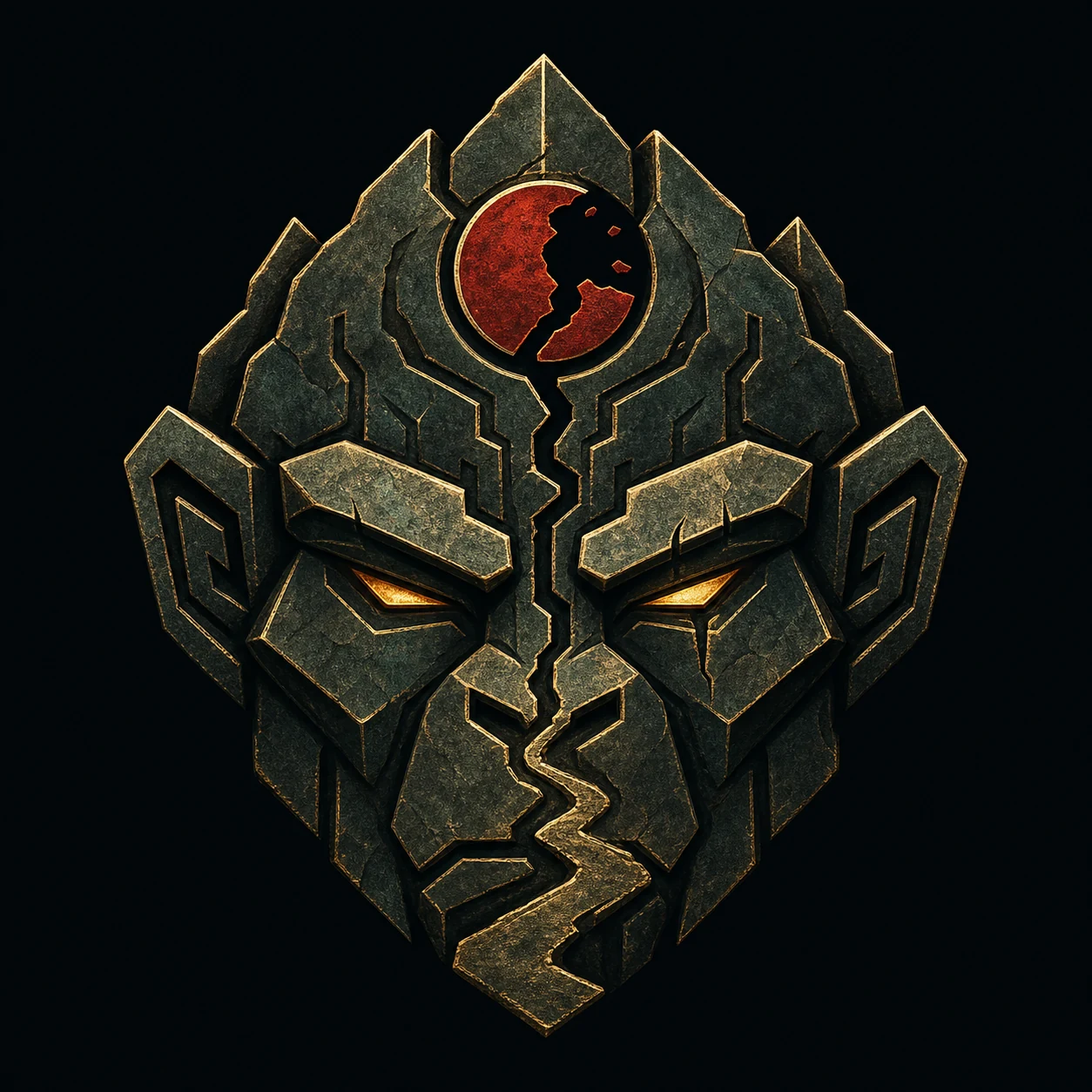
I'm not good with words. Don't rush me.
We shanxiao live in the old forest and do one thing all our lives: keep the crossings. Grandfather kept the fork on the north slope. His grandfather kept the footpath under Broken-Cloud Cliff. It came down to me, and I keep the log bridge into the old forest behind the mountain.
What does keeping a crossing mean? Counting.
How many go in, how many come out. If the numbers match, it's been a good day. If they don't, you go into the trees and search. A lost herb-gatherer, a peddler with a twisted ankle, a monkey cub stuck up a tree — find them, carry them out, set them down by the bridgehead, then watch from far off until they're walking. Never let them see you. When people see the way we look, they scream; when they scream, their legs give; and when legs give, mountain roads eat people.
Grandfather said our fearsome faces are the mountain's own idea. Set something frightening to keep the road, and the bad things keep away.
I believed him. In all my years at the bridge I've counted the peddlers past four thousand crossings, herb-gatherers past two thousand, monkey cubs beyond numbering. Errors: none. Not once.
Not once — until last month.
That day, seven people went into the forest. Bureau people — the HUNT character on their flag; I know that one. They were headed toward the Eclipse Altar, rope-loops at their belts, and a kind of lightless black box. I squatted at my old post by the bridgehead and waited for them to come out.
Full dark, and out they came. I counted: one, two, three, four, five, six.
Six.
I thought I had miscounted, so I counted twice more. Six. They passed my bridge by torchlight and I looked at them face by face — and among the six there was no sign of the young one who had walked at the rear. But here is the strange part: the six were talking and laughing. Not one looked back. Not one called a name. As if, from the moment they entered the mountain, they had always been six.
I waited past midnight. The young one never came out. I searched the forest three days.
From my bridge to the Eclipse Altar there is exactly one path. I went over it inch by inch: no person, no blood, no sign of a struggle — even the footprints were in perfect order. Seven trails going in. Six trails coming back. All of them crisp. The seventh trail walks up to the ring of black stones around the Altar's edge, and then it isn't there. Not broken off. Not there — as if the walker had been gently wiped away by the road itself, mid-stride.
I have no gift for speech, but I knew this was beyond me. A person lost at my crossing is my error. I took up Grandfather's old cane of mountain vine and, for the first time in my life, left the log bridge and went down to report it.
First to the Bureau post at Aolai Town. The officer under the flag heard me out, leafed through his register, and said: six personnel entered the mountain on duty this month; six returned; none missing. And told me not to spread yao-talk and unsettle people.
Seven, I said. I counted three times.
He spread the register open for me to see. Six names on the page.
I can't read. But I can count. The names in that register: six. And the seventh — the young man whose face I studied all that night by torchlight — has no name, no one searching, no one remembering.
How can there be such a thing in this world? A person gone, without even the going-missing left behind.
Later, the herb-gathering boy came past my bridge. I stopped him and stumbled through the telling of it. The boy understood. He looked a long time toward the Eclipse Altar, then asked: old keeper — do you still remember that man's face?
I do. These eyes of mine have never once forgotten a face they've seen.
The boy said: then you must keep remembering him. As long as one yao in this world still remembers his face, he has not been wiped away clean.
So I came along. I can't fight, and I walk slowly. But all this road west, at every crossing we pass, I will be counting for you —
who went in. Who came out. And who is being quietly subtracted from this world.