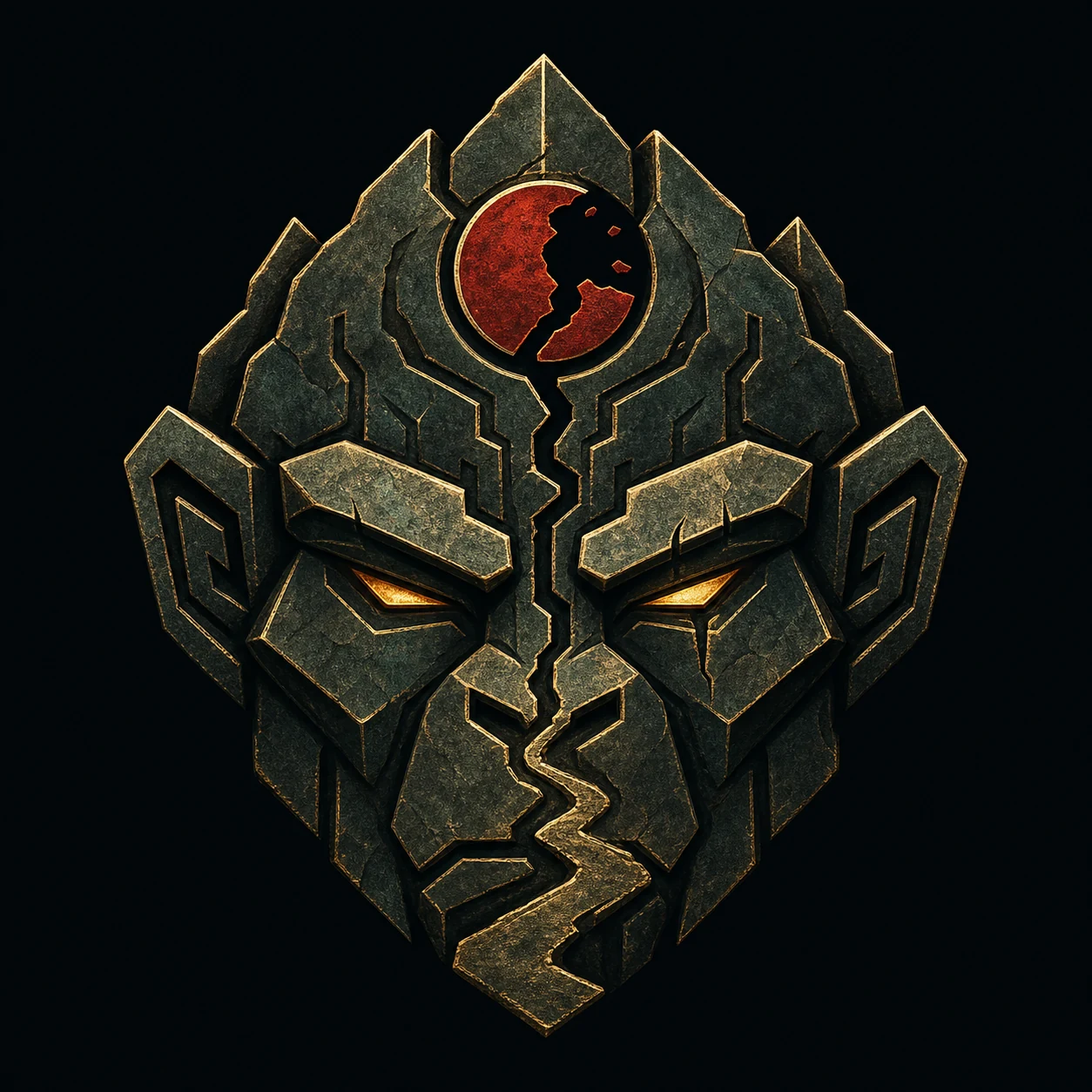
The Water-Averting Golden-Eyed Beast. Mount of the great Bull Demon King. The classic writes it "water-parting": I split the waters and open the road; and golden-eyed: my gaze passes through waves. In the old days the King rode me down to the Jade-Wave Pool banquets — eight hundred li of water-road crossed like level ground.
The turn of my whole life came by way of a swindle.
Three hundred years ago — the affair of the banana-leaf fan. The King was feasting at the Jade-Wave Pool, and I stood tethered at the pool's floor. Sun Wukong, desperate for the fan, slipped into the water-palace, stole me, took the King's own shape, rode me straight to Banana-Leaf Cave — and swindled the true fan out of Princess Iron Fan's hands.
The Princess drank at one table with the false King and did not know him. And I?
I carried him from the pool-floor to the cave-mouth — and the whole road, did not know him either.
When the King recovered me, he did not beat me. He only sighed: "Beast — can you no longer even smell your old Bull?"
That sentence cut worse than any whip.
I am a mount. A mount's first duty is not footspeed — it is knowing the master. Every mount under heaven knows its master by three things: form, voice, and scent. The monkey could counterfeit the form; could mimic the voice; but scent — a monkey is a monkey and a bull is a bull, and how could that mountain-stone-and-peach monkey-scent of his be covered?
It could not be. Ten thousand times I have replayed that road: his "bull-scent" was leaking the whole way. It is not that I failed to smell it.
I smelled it — and did not dare believe myself.
The rider's form was the King; the voice was the King; the commands letter-perfect. My nose said wrong; my eyes and ears said right. Three votes to one — and I swallowed my own one vote.
In the instant I swallowed my own judgment, I was already a blind beast. Golden eyes, worn for nothing.
So the three hundred years since, what I have trained is not the eyes.
It is that one vote.
I steeped myself in the world's masterlands of disguise to train it: to brother Mountain Wraith's empty villages, parsing true from mimicked accents sentence by sentence; to White-Bone Ridge for the Lady's three-act play, dismantling her seams scene by scene; shadow-reading beside brother Wangliang; earth-listening beside Elder Diting. Training what, exactly? Training trust in my own vote: when the reports of eye, ear, nose, and tongue make war on one another —
stake everything on the channel that has never learned to lie.
Three hundred years, and these are true golden eyes at last: form, voice, scent — three gates, and if one fails to match, I erupt on the spot. No more mercy for "three votes to one." The beast-handlers who have traded for me know my temper: a claimed master gets three days' verification — and once verified, through water or through fire, I carry them to the end.
Before the King marched west he came down to the pool to see me. He rubbed my mane and said: old partner — those eyes of yours are harder now than my iron cudgel. I go to find my seventh brother. You — go carry that child with the medicine basket.
He said: around that boy now gathers the most important company under heaven — and the waters ahead of them run fouler at every crossing. The Weak Water. The Forgetting. The ferry-reaches of the nether river. No common hull may touch them.
"The water-parting art is due for its great commission."
So here I am. The waters the company cannot cross, I part. Whatever hides beneath, my golden eyes see three fathoms ahead of the keel.
Last — the meeting I am waiting for.
The whole world hunts the Great Sage Equal of Heaven. The old Bull searches with the seventh bowl in his breastplate; Flower-Fruit Mountain waits by its stone seat. I wait too — but my waiting is a private account:
I mean to tell him, to his face, exactly where his disguise leaked on that ride.
Not to shame him. To thank him — without that leak, I could never have swallowed that defeat; and without swallowing it, I could never have trained these true golden eyes.
And one small thing besides, that I have carried three hundred years:
on that ride, crossing the water, his hand patted my mane. Twice. Lightly.
The King never pats me. The King only bellows.
Those two pats were light, and practiced — the way one pats an old acquaintance.
Monkey King, oh Monkey King: those two pats of yours — were they mere habit? Or —
had you recognized me too, and were you, in your way, saying hello?
I have kept that question three hundred years.
When we meet — in water or on mountain — you owe me, at last, an answer.