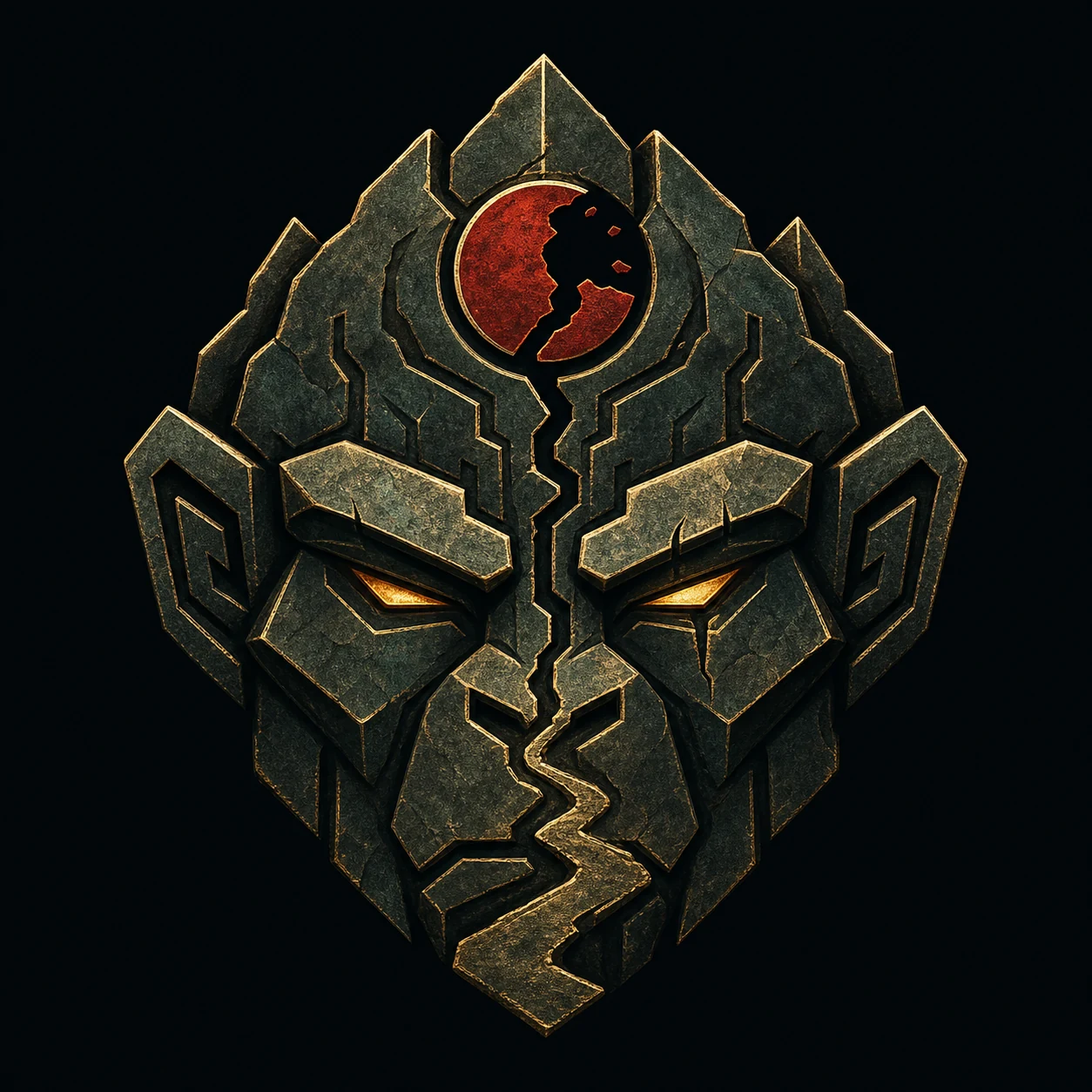
The young ones call me Elder Yinglong. In truth, elder is far too polite a word to waste on me — the ancestors of everything that swims in this sea would themselves owe me the title.
I have wings. Among dragons, only those who live long enough grow them. How long? Put it this way: I was present when the foundations of this Dragon Palace were laid. I remember what this sea was called before the palace existed. And further back still, the sky hung low — so low that I had to bank sideways at takeoff to keep my wingtips from brushing the roots of the clouds.
The affliction of living too long is that one speaks less and less. Not for lack of things to say, but because every sentence must be weighed: spoken to whom? And who could bear its weight?
Today I make an exception. Because some words, left unsaid much longer, will run out of anyone able to bear them.
The young take this present calamity for the first of its kind since the world began: tides in disorder, a black moon overhead, a gate fallen at the sea's floor, a canopy sealing the sky. Even the boldest of the young flood dragons reckons it a three-hundred-year-old debt.
It is not.
Long, long ago — before the first page of your genealogies had any writing on it — this sea was locked once before.
That time too, the tides broke first. That time too, a moon sickened first. That time too, the spirit of the water was drawn off inch by inch, and whole shoals of fish forgot their own names. And then several mighty ones — names you now see only on incense tablets — gathered above the Eye of the Sea, and forged a lock.
I served as the core of that lock.
Do not ask for details. They are the origin of the third broken bone in my wing, and the reason I have declined, for ten thousand years, to fly over the Eye of the Sea. I will tell you only the three things that matter.
First: what the lock held was not water, and not a yao. It was a thing without shape. It does not swim, does not bite, makes no sound. It does one thing only — it turns what is full, little by little, into what is empty. A full sea into an empty one. A full wish into a hollow one. We could not learn its name, so we called it simply the Depletion.
Second: a lock cannot kill it. A lock can only slow it. The forgers said so plainly: to end the Depletion, you must find something full enough — so full it cannot be swallowed, cannot be dissolved, a thing to lodge in its throat and burst it from within. What could be that full? They never found it. They left one sentence behind: Where fulfilled wishes gather and merit comes home — that, perhaps, might suffice.
Third — and this I least wish to say: the last lock, when it opened, was not burst open by the Depletion.
It was opened from the outside. By a person. By hand.
Who, and why, I will not tell. Not to tease you — but because I watched that person do it with my own eyes, and ten thousand years later I still cannot decide whether they were right or wrong. Every time I come near to deciding, I lose it again.
Now the second lock groans beneath the Dragon Palace, winding tighter. And three hundred years ago, a merit vast beyond weighing went west and fell silent on the road. Children — do you hear it now? The forgers' sentence — where merit comes home — and this three-hundred-year rotten ledger are two halves of a single thing.
Someone read that sentence three hundred years before we did.
Read it, understood it — and intercepted the merit mid-road.
Whether they meant to feed the Depletion full, or to starve the lock, or to finish what the lock-opener of old left undone — this ten-thousand-year-old head has weighed it to this day, and cannot come to an answer.
So, child walking west, this old dragon asks a single thing of you. When you reach the farthest west, and stand before the one who took the merit —
do not strike first.
Look into their eyes for me.
The lock-opener of old had something in their eyes that I have seen exactly once in all my life. If, in the eyes of the one in the west, you see it again —
come back and tell me. These old wings have one more flight left in them.